Epitalon benefits and cellular aging: what the research actually shows
The short answer
Epitalon (epithalon, AEDG) is a synthetic four-amino-acid peptide modeled on a pineal-gland extract. People use it for longevity and sleep. Its telomere benefits are shown in cells in a dish; in mice it did not raise average lifespan; and the striking human mortality figures come from the parent extract, epithalamin, in small single-group trials. It is promising, not proven.
Few longevity compounds have a story as clean as epitalon’s: a peptide that “turns telomerase back on,” rebuilds the caps on your chromosomes, and, the marketing implies, resets the biological clock. The story is appealing because it is built on a real experiment. But the distance between that experiment and the claim that epitalon extends human life is enormous, and most pages selling the peptide never mention it. This guide holds apart things that usually get blended together: what epitalon actually is, what people use it for, what the research has genuinely shown and at what evidence level, and what users report. Every factual claim links to a primary or peer-reviewed source.
What is epitalon, and how is it related to epithalamin?
Epitalon is a synthetic four-amino-acid peptide, alanine-glutamic acid-aspartic acid-glycine, abbreviated AEDG, designed as a simplified copy of a natural pineal-gland extract called epithalamin. The two names matter because they are not the same substance, and the difference runs through the whole evidence base. Epithalamin is a polypeptide preparation originally isolated from the pineal glands of animals; epitalon (also spelled epithalon) is the short, defined tetrapeptide that Khavinson’s group synthesized to reproduce the active core of that extract. A 2025 review describes it plainly: “Epitalon, also known as Epithalon or Epithalone, is a tetrapeptide, Ala-Glu-Asp-Gly (AEDG),” built from the amino-acid composition of the bovine pineal extract epithalamin (Araj et al., 2025).
Both were developed at the St. Petersburg Institute of Bioregulation and Gerontology by the Russian gerontologist Vladimir Khavinson, whose laboratory has produced most of the primary research on these “peptide bioregulators” over several decades. That single-source origin is not a disqualifier, plenty of real science starts in one lab, but it is a fact to carry forward when weighing how established any of these findings are. Keep the epitalon-versus-epithalamin distinction in mind: as you will see, the eye-catching human “life-extension” numbers come from the parent extract, while the famous telomere result comes from the synthetic peptide.
What do people use epitalon for?
People use epitalon for two main goals, healthy aging and sleep, and the claimed benefits line up with three lines of research at very different evidence levels.
- Longevity and “cellular aging.” The core claim is that epitalon reactivates telomerase and lengthens telomeres. That rests on cell-culture studies and a 2003 mouse lifespan study. Evidence level: laboratory and animal studies; no human longevity trial of the synthetic peptide.
- Sleep and circadian rhythm. Epitalon is often filed under sleep because of its pineal-gland origin. A 2025 review reports a human circadian study in 75 women in which melatonin excretion rose about “1.6 times relative to the placebo group”. Evidence level: one small human biomarker study; no trial measuring sleep quality as an outcome.
- General “anti-aging” claims. The headline human mortality figures come from trials of the parent extract epithalamin, not the synthetic peptide. Evidence level: small single-group human studies of a different substance.
The sections below take each claim apart, starting with the biology behind it.
What do telomeres and telomerase have to do with aging?
Telomeres are the protective caps on the ends of your chromosomes, and they shorten a little every time a cell divides; telomerase is the enzyme that can rebuild them. When telomeres get critically short, a cell stops dividing and enters senescence or dies, a process that is one of the recognized hallmarks of cellular aging. Most adult body cells keep telomerase switched off, which is part of why their replicative lifespan is limited. This is the biology the entire epitalon pitch hangs on: if a compound could safely reactivate telomerase in ordinary cells, the reasoning goes, it might extend how long those cells can keep dividing.
The logic is sound as far as it goes, but two cautions belong right next to it. First, telomere length is a marker associated with aging, not a proven master switch for it; lengthening telomeres in a dish does not automatically translate to a longer, healthier life in a person. Second, telomerase reactivation is exactly the capability cancer cells exploit to divide without limit, which is why “turn telomerase back on everywhere” is a proposition biologists treat with real caution rather than uncomplicated enthusiasm. Those two caveats frame everything that follows.
What did the original telomerase study actually show?
The single most-cited epitalon paper is a short 2003 laboratory experiment in which the peptide switched telomerase back on in human fetal cells that normally have it turned off. In the words of its own abstract, adding epitalon to “telomerase-negative human fetal fibroblast culture induced expression of the catalytical subunit, enzymatic activity of telomerase, and telomere elongation” (Khavinson, Bondarev & Butyugov, 2003). The authors interpreted this as reactivation of the telomerase gene in somatic cells and concluded that it “indicates the possibility of prolonging life span of a cell population and of the whole organism” (Khavinson et al., 2003).
Read that conclusion carefully, because the gap between what was measured and what was claimed is the whole point. What was actually demonstrated was an effect on cells in a dish: telomerase expression, telomerase activity, and longer telomeres in cultured fibroblasts. What was offered was a hypothesis, the “possibility” of prolonging the life of a cell population “and of the whole organism.” The organism-level claim is a suggestion the experiment cannot support on its own; the data are cell-culture data. This is the foundational study behind epitalon’s telomere reputation, and it is important to see it clearly for what it is: a genuine and interesting in-vitro finding, not evidence that the peptide lengthens human lives.
Has the telomere finding been reproduced since?
Yes, at least partly, a 2025 study reported that epitalon lengthened telomeres in several human cell lines, but the effect and its mechanism varied by cell type in ways that complicate the simple story. Working with breast-cancer lines, normal fibroblasts, and epithelial cells, the researchers found telomere lengthening across the board, but the route differed: in the normal cells the change tracked with telomerase reactivation (a roughly four-fold rise in telomerase activity in one fibroblast line and a larger rise in an epithelial line), while in the cancer cells there was “no significant increase in telomerase activity compared to the non-treated controls,” and telomeres appeared to lengthen through an alternative, telomerase-independent pathway instead (Al-dulaimi et al., 2025).
That nuance is easy to lose in a headline and worth keeping. A replication that finds the same endpoint (longer telomeres) through two different mechanisms, and specifically raises the alternative-lengthening pathway associated with some cancers, is a reason for careful interest, not a victory lap. The authors are candid about the limits: “This was an in vitro study using human cell lines in 2D cell cultures,” and they call for three-dimensional cultures and animal models as the next step (Al-dulaimi et al., 2025). In other words, two decades after the original paper, the telomere effect is more reproducible than many longevity claims, and still confined to cells in a dish. For the narrower question of whether lengthening telomeres in a dish amounts to real telomere extension in a living person, we take the studies apart in a focused explainer on whether epitalon actually extends telomeres.
How might epitalon work?
The leading explanations are that epitalon acts on the pineal gland to influence melatonin and circadian rhythm, and that it binds DNA to nudge gene expression, but both are proposed mechanisms, not settled ones. On the neuroendocrine side, the 2025 review notes laboratory and animal work in which epitalon affected melatonin synthesis in pineal cells and, in one human circadian study of 75 women, the review reports melatonin excretion rose about “1.6 times relative to the placebo group” (Araj et al., 2025). Because melatonin and circadian regulation are themselves tied to aging biology, this is a plausible avenue, but a change in a melatonin biomarker is not a longevity outcome, and the study is small.
The second proposed route is epigenetic. A separate study titled, tellingly, “AEDG Peptide (Epitalon) Stimulates Gene Expression and Protein Synthesis during Neurogenesis: Possible Epigenetic Mechanism” reported that in human gingival mesenchymal stem cells the peptide up-regulated several neuronal-differentiation genes, and proposed that direct binding between the peptide and histone proteins “may be one of the mechanisms” behind that effect (Khavinson et al., 2020). The authors’ own word, “possible”, is the honest one. And the broader review is blunt about the state of play: despite many experiments showing statistically significant effects, “its mechanism of action remains unclear” (Araj et al., 2025). A compound can produce measurable effects while nobody yet knows exactly how, which is precisely epitalon’s situation.
What does the animal evidence show about lifespan?
In rodents, epitalon has nudged some aging markers and extended the tail end of the survival curve, but the best-documented mouse study found no increase in average lifespan. In a controlled experiment in female mice injected with the peptide monthly from three months of age until natural death, “treatment with Epitalon did not influence food consumption, body weight or mean life span of mice”; what it did do was increase “by 13.3% the life span of the last 10% of the survivors” and “by 12.3% the maximum life span” versus controls, while reducing chromosome aberrations in bone-marrow cells (Anisimov et al., 2003). On cancer, the same study found the peptide “did not influence total spontaneous tumor incidence,” though it inhibited one specific tumor type (Anisimov et al., 2003).
This is a more honest picture than “epitalon extends lifespan” suggests. A shift in maximum and late-survivor lifespan without any change in the average is a real but modest signal, the kind that motivates further study, not the kind that establishes a therapy. It also came from the same research program that generated the telomere data, at a specific dose and schedule in one mouse strain, and it has not been broadly replicated by independent longevity labs. Rodent geroprotection is a legitimate starting point in aging research; it is a long way from a demonstrated benefit in people.
What does the human evidence show, and what did those studies actually use?
The human “life-extension” numbers most often attached to epitalon come from trials of epithalamin, the parent pineal extract, not the synthetic peptide, and they were small studies from a single institute that have never been independently replicated. The most-cited example assessed the pineal preparation epithalamin (alongside a thymus preparation, thymalin) in 266 elderly people followed for six to eight years; the paper reported that mortality in the epithalamin-treated groups ran roughly 1.6-to-1.8-fold lower than controls, that the combined pineal-plus-thymus regimen was associated with an about 2.5-fold reduction, and that a subgroup given the combination annually over six years showed a reduction of about 4.1-fold (Khavinson & Morozov, 2003). Those are striking figures, and they belong to epithalamin, administered in a specific Russian clinical program, not to the AEDG peptide sold online as “epitalon.” PeptideAgent’s epitalon profile flags the same substitution: the randomized trial often cited for epitalon tested the pineal extract Epithalamin, not the synthetic peptide.
An independent appraisal by the Alzheimer’s Drug Discovery Foundation’s Cognitive Vitality project puts the necessary caveats plainly: it notes that “every preclinical and clinical study discussed here has been conducted by Dr. Khavinson’s group in Russia with no independent confirmation of their results,” that the mortality findings “have not been independently confirmed,” and, decisively for the synthetic peptide itself, that “[c]linical studies on epithalon have not been conducted” at all (Cognitive Vitality / ADDF). Put those facts together, the marquee human data are (1) from the parent extract and (2) from a single research group and never independently replicated, and the honest reading is that epitalon has no robust, independently replicated human evidence for extending lifespan. That is not the same as “it was disproven”; it means the strong claim has never been properly tested.
Epitalon evidence at a glance
The table below sets the popular claims about epitalon against what the underlying studies actually established and at what evidence level. Read it as a summary of evidence quality, not as a recommendation to use the peptide.
| Dimension | What the record actually shows |
|---|---|
| What it is | A synthetic tetrapeptide, Ala-Glu-Asp-Gly (AEDG); a simplified analog of the pineal extract epithalamin, from Khavinson’s St. Petersburg institute |
| Telomerase / telomere effect | Demonstrated in vitro: telomerase reactivation and telomere elongation in cultured human cells (2003; partially reproduced 2025) |
| Mechanism | Proposed pineal/melatonin and epigenetic (histone-binding) routes; the review states the mechanism of action “remains unclear” |
| Best animal lifespan data | No change in mean mouse lifespan; ~13% rise in the last-10% survivors and ~12% in maximum lifespan, one lab, one strain |
| Human “life-extension” data | From epithalamin (the parent extract) + thymalin, small, single-group trials never independently replicated; not the synthetic peptide |
| Independent verdict | Human evidence “limited” and never independently confirmed, all from one research group; no clinical studies of the synthetic peptide itself (Cognitive Vitality / ADDF) |
| Cure/disease claims | None supported; telomere/lifespan work is preliminary and mostly preclinical |
| Sleep / melatonin | One small human study (75 women) reported higher melatonin excretion versus placebo; sleep quality itself not measured as an outcome |
| Human safety data | Systematic short- and long-term toxicity studies still lacking, per the 2025 review |
The row that reframes the marketing is the split between “demonstrated in vitro” and “human ‘life-extension’ data … never independently replicated; not the synthetic peptide.” Epitalon’s strongest evidence is in cells; its most impressive human numbers are for a different substance. Everything sold on the promise of the first while quoting the second is overreaching.
How strong is the evidence, really?
Taken together, the evidence for epitalon as a human anti-aging therapy is preliminary: genuine but limited laboratory and rodent data, and thin, single-source human data, much of it for the parent extract rather than the peptide itself. The in-vitro telomerase work is real and partially reproduced. The rodent geroprotection is real but modest and single-source. The human longevity signal is confounded by the epithalamin-versus-epitalon substitution and by a single-source evidence base that no rigorous reviewer would call definitive. That is a coherent, honest summary, and it is very different from “clinically proven to extend life.”
Three limitations apply across the whole literature. The strongest mechanistic and lifespan data are from cells and mice, which translate to humans unreliably. Most of the human work was conducted by one institute under study conditions that may not match a modern telehealth patient. And the review that is friendliest to the peptide still concedes that basic groundwork is missing, noting that “the quantity of physico-chemical and structural investigations of this peptide remains quite limited” (Araj et al., 2025). None of this makes epitalon a fraud. It makes it an interesting, partly studied compound whose real-world anti-aging value in people is genuinely unresolved, and anyone presenting it as settled is selling certainty the science has not earned.
What are epitalon’s side effects, and how safe is it?
There is no adequate human safety data for epitalon, so nobody can give you a reliable list of its side effects or how often they occur, and product quality is a separate risk on top of that. On the first point, the same 2025 review that catalogs epitalon’s promising effects is direct about the gap: “information regarding critical issues about this peptide’s safety is missing,” and “before Epitalon’s approval as a new API, additional studies on its potential short- and long-term toxicity are essential” (Araj et al., 2025). A compound can look well tolerated in small studies and still lack the systematic short- and long-term toxicity, genotoxicity, and interaction data that any approved medicine must carry, and epitalon lacks it.
Product quality is the second issue, and it varies by source. Forensic analysis shows how wide the range can be: a peer-reviewed study of falsified peptide products, most often obtained from illegal internet pharmacies, found “a low purity (ranging between 5% and 75% for cysteine containing peptides),” wide variation in the amount of drug per unit, and toxic elemental impurities including arsenic at concentrations “up to ten times the ICH toxicity limit for parenteral drugs” (Janvier et al., 2018). Who should be most cautious: because epitalon’s telomere mechanism theoretically overlaps with pathways cancer cells exploit, anyone with a history of cancer has a specific reason to talk to a clinician first, as do people who are pregnant or breastfeeding, groups in which it has not been studied.
How do people take and stack epitalon?
In community discussion epitalon is usually one part of a larger longevity routine rather than a standalone compound. Users describe it as a “peptide layer” alongside lifestyle changes, hormone optimization and other compounds such as MOTS-c, and many list it among several peptides taken over set periods and rotated. A recurring debate is oral versus injectable use: some users report effects from oral epitalon, while others question it because absorption by mouth is widely described as poor. No study has compared the two routes head to head, and no trial has tested epitalon in combination with anything else, so every stack is an N=1 experiment. For how epitalon compares with the main non-peptide alternative, see NAD+ vs peptides for longevity, and for how it ranks against MOTS-c, thymosin alpha-1 and GHK-Cu on human evidence, see our guide to longevity peptides in 2026.
What does epitalon cost?
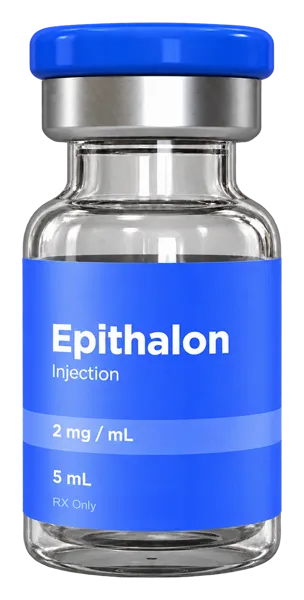
On the storefront linked in this page’s “Where it’s sold” card, the list price captured on October 12, 2026 was $359 a month for a 2 mg/mL, 5 mL injectable vial, with no multi-month plan shown. Prices change, so treat that as a dated snapshot, and set it against the evidence level above: most of what epitalon is marketed on has been shown in cells and mice.
What is the community saying about epitalon?
Online, epitalon is talked about mostly as a sleep and longevity peptide, and the reports are mixed. Our epitalon community tracker, drawn from 16 public posts on X collected in July 2026, found these recurring threads:
- Sleep. Some users say epitalon helped restore disrupted sleep; another, tracking sleep with a wearable, reported that deep sleep held steady but REM sleep barely rose despite oral dosing.
- Vivid dreams. Several users mention unusually vivid or memorable dreams and half-jokingly read them as a sign the peptide is working. These are offhand observations, not tracked outcomes.
- A layer, not a fix. Posts frame epitalon as one component of a broader longevity plan rather than a standalone intervention.
- Conflicts of interest. Some posters note affiliate relationships when they discuss what they take, a useful reminder to weigh who is talking.
Set against the research, the community’s focus on sleep fits the small melatonin study better than the telomere story it is usually marketed on, and none of these reports can separate the peptide from everything else people change at the same time.
Status: Not FDA-approved; sold by some telehealth providers as a compounded prescription. An FDA advisory committee reportedly voted in July 2026 to recommend allowing pharmacies to compound it; nothing has changed yet. (How peptide status works)
What this means if your goal is a longer healthspan
If your real goal is a longer, healthier healthspan, the useful next step is to work with a licensed clinician on the levers that actually have strong human evidence. As this page has shown, epitalon is genuinely interesting cell biology, a compound with real in-vitro telomere data and modest rodent signals, and, at the same time, unproven for human longevity, backed on the human side mostly by small trials of a different substance, and short on human safety data. Those facts are not a reason to abandon the goal; they are a reason to weigh it with someone who can look at your whole picture.
A licensed provider can review your actual risk factors and biomarkers, order appropriate testing, and focus your effort on the interventions with the best evidence for healthspan, the unglamorous, well-supported ones, and talk through where a compound like epitalon does or does not fit. That may well be something other than the peptide you came in asking about, and that is the value of clinical supervision. To make the handoff concrete, we condensed everything above into a free, one-page checklist of the exact questions to bring to a licensed provider about any longevity compound.
Key takeaways
- Epitalon (epithalon; Ala-Glu-Asp-Gly / AEDG) is a synthetic tetrapeptide modeled on the pineal extract epithalamin, developed by Khavinson’s St. Petersburg institute, and epitalon and epithalamin are not the same substance.
- The famous telomerase and telomere-lengthening result is real but is in-vitro cell-culture data; the 2003 study only said it “indicates the possibility” of prolonging lifespan, and a 2025 replication in human cell lines still calls itself an in-vitro 2D study.
- The best-documented mouse study found no change in mean lifespan, only a modest rise in maximum and late-survivor lifespan, from a single research group.
- The impressive human “life-extension” mortality figures come from epithalamin (the parent extract) in small, single-institute trials that have never been independently confirmed, and no clinical studies of the synthetic peptide itself have been conducted; an independent appraisal calls the human evidence limited.
- People mainly use epitalon for longevity and sleep; the sleep angle rests on one small melatonin study, and community reports on sleep are mixed.
- Epitalon lacks adequate human safety data, so its side-effect profile is unknown, and product quality varies by source; decisions about longevity are best made with a licensed clinician.
Sources (8)
Advertising disclosure: links marked "Paid link" go to Bodybuilding Peptides (trybbpeptides.com), an affiliate destination, and Healthspan Signal may earn a commission if you buy there. Our coverage is independent of that relationship, and nothing on this page is medical or legal advice.
 See it at Bodybuilding Peptides