Longevity peptides in 2026: the popular ones, why people use them, and how thin the human evidence really is
The short answer
The most popular longevity peptides are MOTS-c (energy and metabolism), epitalon (sleep and anti-aging), thymosin alpha-1 (immune support) and GHK-Cu (skin). All have real mechanisms, but the evidence is thin: epitalon's is mostly cell culture, MOTS-c's is mostly mice, thymosin alpha-1's human trials are in infection, and GHK-Cu's are topical skincare. None has a human longevity trial.
Longevity peptides are one of the most hyped and least settled corners of the anti-aging market. This guide covers why people pick each of the four on the short list, then grades them by how strong the human evidence actually is, and weighs all four against a popular non-peptide option, NAD+ precursors. It also covers side effects, stacks, cost and what users report.
What are longevity peptides?
Longevity peptides are a marketing umbrella, not a recognized drug class, and the label papers over big differences in evidence. The term points at a handful of short amino-acid chains that biohacker communities discuss for slowing biological aging. The most prominent are epitalon (also spelled epithalon), the mitochondrial peptide MOTS-c, the immune peptide thymosin alpha-1 and the copper-binding skin peptide GHK-Cu. Each has an interesting mechanistic story, and each is sold online with promises that run well ahead of the data. What unites them is not proven benefit but a shared gap: none has a completed human trial showing it slows aging. NAD+ precursors such as nicotinamide mononucleotide (NMN) and nicotinamide riboside (NR) are small molecules, not peptides, but they compete for the same customer and the same longevity budget, so this page includes them as the comparator.
What are the most popular longevity peptides, and why do people use them?
In online longevity communities, the peptides that come up most are MOTS-c and epitalon, with thymosin alpha-1 discussed for immunity and GHK-Cu for skin. The reasons people give track the research themes, not any proven lifespan effect. The first three rows below come from our community trackers, which summarize public posts on X collected in July 2026. The GHK-Cu row comes from the research, because we have no community tracker for it yet.
| Peptide | Why people say they use it | What users report | Common pairings |
|---|---|---|---|
| MOTS-c | Mitochondrial function, energy, metabolic health, “feeling younger” | Some describe more energy; others call it hype; personal reports, not measured outcomes | SS-31, NAD+, GHK-Cu, GLP-1 drugs, often timed around fasting and training |
| Epitalon | Sleep and longevity | Mixed sleep reports, including tracked REM that did not change; some describe vivid dreams | Used as one “layer” in a larger routine, alongside MOTS-c and other peptides |
| Thymosin alpha-1 | Immune support, staying well when people around them are sick | A few users credit it with avoiding illness; individual anecdotes, not a pattern | One user mixes it with GHK-Cu; another lists it as one not to co-mix |
| GHK-Cu | No tracker yet; its research focus is skin repair and collagen | Its human research is in topical skin creams, not injected longevity use | Users list it in MOTS-c stacks |
Two things stand out. First, the reasons people give line up with what each peptide is studied for: energy and metabolism for MOTS-c, sleep and the pineal story for epitalon, immunity for thymosin alpha-1. Second, almost nobody takes any of them alone, so individual reports cannot separate one compound’s effect from everything else in a stack.
Longevity peptides ranked by evidence
Ranked by human evidence, not by popularity, the order looks very different from the marketing. The table grades each compound in plain words, with NAD+ precursors included as the non-peptide comparator. Nothing on it has been shown to extend human life. PeptideAgent’s review of peptides for longevity reaches the same bottom line, that no peptide has been shown to extend human lifespan, and judges each one against the baseline of exercise, sleep, and blood pressure and lipid control.
| Compound | What it is studied for | Evidence level, in words | Strongest evidence to date | Human safety data |
|---|---|---|---|---|
| NAD+ precursors (NMN, NR) | NAD+ metabolism and metabolic markers (non-peptide comparator) | Small, short human trials of lab markers | NR raised blood-cell NAD+ by about 60%; NMN raised muscle insulin sensitivity in 25 prediabetic women | NR was well tolerated over 6 weeks in healthy middle-aged and older adults |
| Thymosin alpha-1 | Immune modulation and immune aging | Human trials, but in infection, cancer and immune disease, not longevity | Trials in hepatitis B and C, sepsis, HIV and several cancers; influenza-vaccine adjuvant work in the elderly | From those disease-setting trials: usually well tolerated, mainly injection-site irritation |
| GHK-Cu | Skin repair, collagen, wound healing | Small human studies of topical skin creams; no injected or longevity trial | 12-week facial-cream studies in women with sun-damaged skin | Reported from cosmetic and wound-healing use, not from injection |
| MOTS-c | Mitochondrial and metabolic aging, insulin sensitivity, performance | Mostly mouse studies, plus one human exercise-biomarker observation | Mouse performance and healthspan studies; no human intervention trial | No completed human trial of the peptide has reported results |
| Epitalon (epithalon) | Telomerase activity and telomere maintenance, general anti-aging | Mostly cell-culture studies | In vitro human cell studies (2003 and 2025); no completed human longevity trial | Thin; a 2025 review says key safety information is missing |
The rest of this page walks through each row, starting with the two peptides most associated with healthspan.
Epitalon and the telomerase story: what the evidence actually shows
Epitalon’s anti-aging reputation rests almost entirely on cell-culture experiments, not human longevity trials. Epitalon is a synthetic tetrapeptide developed from a pineal-gland extract, and its headline claim is that it switches telomerase back on, the enzyme that rebuilds the protective telomere caps on chromosomes that shorten as cells divide. That claim traces to a small 2003 study in which, as the authors reported, adding epitalon to a telomerase-negative human fetal fibroblast culture induced expression of the catalytic subunit, telomerase activity, and telomere elongation. The same authors described the result as one that “indicates the possibility of prolonging life span of a cell population and of the whole organism.” That sentence was written about cells in a dish, yet it became the seed of nearly every online pitch that markets the peptide as a way to turn back the biological clock. A more recent 2025 laboratory study broadly reproduced the cellular effect, reporting that epitalon can extend telomere length in normal human cells through upregulation of hTERT and telomerase activity, while noting that in cancer cell lines the lengthening ran through a separate pathway. That 2025 team was explicit about the limits of its own work, stating “this was an in vitro study using human cell lines in 2D cell cultures.” The distance between “lengthens telomeres in a dish” and “makes a person live longer or healthier” is the entire ballgame, and no rigorous human trial has closed it. Our dedicated guide to epitalon and cellular aging covers the animal data and why the striking human figures attached to it come from the parent pineal extract, not the synthetic peptide, and a shorter explainer takes on the narrower question of whether epitalon actually extends telomeres in people.
MOTS-c and mitochondrial aging: what’s studied
MOTS-c is a 16-amino-acid peptide encoded inside mitochondrial DNA, and its longevity case comes almost entirely from mice. It was described in a 2015 Cell Metabolism paper as a peptide within the mitochondrial 12S rRNA that regulates insulin sensitivity and metabolic homeostasis; in that work, injected MOTS-c prevented age-dependent and high-fat-diet-induced insulin resistance and diet-induced obesity in mice, acting largely on skeletal muscle by activating the energy sensor AMPK. A 2021 Nature Communications study extended the aging angle, reporting that MOTS-c treatment improved physical performance in young, middle-age, and old mice, and that late-life intermittent dosing increased healthspan in mice. That same paper is the origin of the popular “exercise peptide” framing, because it also found that in people, exercise raises the body’s own MOTS-c: endogenous levels rose sharply in skeletal muscle and modestly in circulation after a bout of cycling in healthy young men. The crucial nuance the marketing drops is the direction of that human finding. It shows that exercise increases MOTS-c, which is an observation about a biomarker, not a trial showing that injecting MOTS-c makes people healthier or longer-lived. Every performance and healthspan result in that body of work came from mice, not from a human longevity study. Our dedicated pillar breaks down what the MOTS-c research actually studies, from the AMPK mechanism to the exercise biology, in depth.
Thymosin alpha-1: real human trials, but not for longevity
Thymosin alpha-1 has the most human clinical data of any peptide on this list, but that data is about infection and immunity, not aging or lifespan. It is a peptide that occurs naturally in the thymus, and a 2020 review describes it as acting through toll-like receptors on immune cells, with therapy that modulates and partially normalizes T-lymphocyte numbers and function. The same review catalogs genuine human trials of the synthetic form, thymalfasin, in chronic hepatitis B and C, sepsis, HIV and several cancers, and notes it is approved in more than 35 countries for hepatitis B and C and as an immune enhancer. It also flags that the hepatitis uses are now obsolete, replaced by direct-acting antiviral drugs. The closest the review comes to aging is immune function in older people: it reports promising results for thymosin alpha-1 as an influenza-vaccine adjuvant, especially among elderly and immunocompromised patients. That is a narrow immune-aging signal, not evidence of slower aging or longer life. Our hub’s thymosin alpha-1 profile covers the full research picture.
GHK-Cu: strong topical skin evidence, weak injectable case
GHK-Cu has real human evidence for topical skin effects and a far weaker case as an injected longevity therapy. GHK is a naturally occurring tripeptide (glycyl-L-histidyl-L-lysine) that binds copper to form GHK-Cu. A 2015 review reports that in plasma, GHK is about 200 ng/mL at age 20 but declines to 80 ng/mL by age 60. The same review says it stimulates both the synthesis and breakdown of collagen and can up- and downregulate at least 4,000 human genes. The human studies the review describes are of skin creams: in one, a GHK-Cu facial cream applied for 12 weeks to 71 women with mild to advanced photoaging improved laxity and clarity and reduced fine lines and wrinkle depth. That is a cosmetic result on the skin it touched. It is not evidence that injecting GHK-Cu slows whole-body aging, and no human trial has tested that. The review’s authors are affiliated with the research and development department of Skin Biology, which is worth knowing when weighing its tone. For the full research picture, including the injectable debate, see our hub’s GHK-Cu profile.
How do longevity peptides compare with NAD+ precursors?
NAD+ precursors beat the peptides on human data and ease of use, but they still fall short of a proven longevity benefit. NMN and NR are small molecules the body converts into NAD+, a coenzyme central to energy metabolism, and they are taken by mouth rather than injected. A randomized, placebo-controlled crossover trial in healthy middle-aged and older adults found that six weeks of oral NR was well tolerated and raised NAD+ in blood cells by about 60% compared with placebo. The best-known NMN trial, in 25 postmenopausal women with prediabetes, found that 10 weeks of NMN raised muscle insulin sensitivity by 25±7%, while body composition, blood pressure and blood lipids did not change. And the biomarker the whole category is sold on is now contested: a 2026 study across seven human cohorts found that whole-blood NAD+ levels remain remarkably stable with age, and its authors say the result challenges blood NAD+ as a biomarker of aging. So the comparison is small human trials of a lab value on one side, and cells and mice on the other. For the full side-by-side, see NAD+ vs peptides for longevity. For how the peptides compare with the drug many longevity enthusiasts weigh them against, see rapamycin vs peptides for longevity.
| Question | Longevity peptides (epitalon, MOTS-c) | NAD+ precursors (NMN, NR) |
|---|---|---|
| How it is taken | Mostly injections | Oral supplements |
| Best human evidence | One exercise-biomarker observation (MOTS-c); cell studies only for epitalon | Small, short randomized trials of NAD+ and a metabolic marker |
| Proven to extend human healthspan | No | No |
| Biomarker it is sold on | Telomere length, performance markers | Blood NAD+, which a 2026 study found does not track age |
What are the best peptides for longevity?
No peptide has been shown to be “best” for longevity, because none has a completed human trial showing it slows aging or extends life. If “best” means the strongest human evidence of any kind, thymosin alpha-1 leads, but its trials are in infection and immune disease, not aging. GHK-Cu comes next for topical skin results. MOTS-c follows on mouse data, and epitalon last on cell-culture data. If your real aim is a longer healthspan, the best-supported levers are not peptides at all, which is why the final section of this page points to a clinician conversation.
Do longevity peptides actually work in humans?
For every peptide in this guide, the honest answer is that rigorous human longevity evidence does not yet exist. What is genuinely published is a mix of cell-culture work, animal studies, small biomarker observations and trials in unrelated diseases. That is a very different thing from a controlled trial showing a person lives longer, ages more slowly, or avoids disease. For epitalon, the strongest data are the in vitro fibroblast experiments and their 2025 cell-line replication, both of which the researchers themselves frame as laboratory findings. For MOTS-c, the strongest data are mouse performance and healthspan studies plus a human exercise-biomarker measurement. Thymosin alpha-1’s human trials are about infection and immunity, and GHK-Cu’s are about skin creams. None of this is fraudulent or fringe, and the mechanisms are real objects of serious research. But a mechanism is a hypothesis about why something might help, not proof that it does. Anyone selling certainty about human longevity outcomes from these peptides is selling past where the science stops.
What are the side effects of longevity peptides?
Safety data follow the same pattern as the benefit data: the better-studied the compound, the more is known, and for the two most popular longevity peptides very little is. For epitalon, a 2025 review cataloguing its effects says plainly that “information regarding critical issues about this peptide’s safety is missing”. For MOTS-c, no completed human trial of the peptide itself has reported results, so there is no measured side-effect rate to quote; our MOTS-c side effects guide covers what little is known. Thymosin alpha-1 is the exception, because its disease trials generated safety data: the 2020 review says the synthetic form is usually well tolerated, with local irritation, redness or discomfort at the injection site among the most common adverse effects. Those data come from sick patients, not healthy people chasing longevity. GHK-Cu’s reassuring safety record comes from topical cosmetic and wound-healing use, which says little about injecting it. Product quality is a separate issue: the FDA notes that even licensed compounded drugs are not reviewed by the agency for safety, effectiveness, or quality before they are marketed, and that a contaminated or overstrength product can cause serious harm. People with a history of cancer, people on glucose-lowering drugs, and anyone pregnant or breastfeeding have the most reason to talk to a clinician first, because none of those groups has been studied.
How do people stack longevity peptides?
In community discussion, longevity peptides are almost always taken as part of a stack, and no stack has ever been tested in a trial. MOTS-c is most often paired with SS-31, another peptide aimed at mitochondria, and users debate whether to run the two together or one after the other, with no consensus. People also fit MOTS-c into wider routines with NAD+, GHK-Cu and GLP-1 drugs, often timed around fasting and training. Epitalon is described as one “layer” in a broader longevity plan alongside lifestyle changes, hormone optimization and other peptides. Thymosin alpha-1 draws disagreement: one user lists it among peptides they would not co-mix, while another says mixing it with GHK-Cu stopped her histamine reaction to GHK-Cu. Every one of these combinations is an N=1 experiment, and stacking is the main reason community reports cannot tell you what any single peptide does.
What do longevity peptides cost?
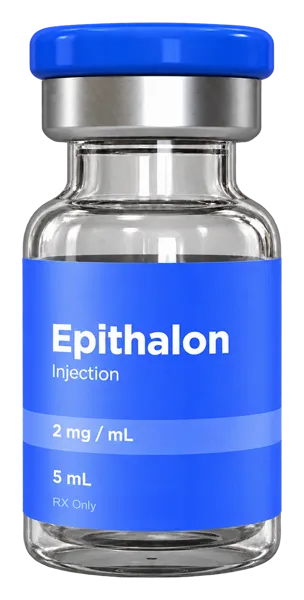
Longevity peptides are expensive relative to most supplements, and the price says nothing about the strength of the evidence. On the storefront linked in this page’s “Where it’s sold” card, list prices captured on October 12, 2026 were $359 a month for epitalon (2 mg/mL, 5 mL vial; no multi-month plan shown), $619 a month for MOTS-c on a one-month plan or $565 a month on a three-month plan (2 mg/mL, 5 mL vial), and $220 a month for thymosin alpha-1 on a one-month plan or $180 a month on a three-month plan. Prices change, so treat these as a dated snapshot. A year of MOTS-c at those prices runs to several thousand dollars for a compound with no completed human trial, which is worth weighing against the cost of the well-studied basics, such as resistance training, sleep and metabolic care.
What is the longevity community saying?
Online, the longevity conversation about peptides is enthusiastic, stack-heavy and more skeptical than the marketing suggests. Our community trackers, built from public posts on X collected in July 2026, found these recurring threads:
- MOTS-c as the energy peptide. In 19 posts, users mostly describe MOTS-c as a mitochondrial peptide for cellular energy, and several say it left them with more energy or feeling younger. These are personal characterizations, not measurements. See our MOTS-c community tracker.
- Hype skepticism. One commenter lumped MOTS-c in with trend-chasing and called followers sheep, while another said he was fully prepared to trash talk the peptide before trying it.
- Epitalon for sleep, with mixed results. In 16 posts, users file epitalon under sleep and longevity. One describes using it to fix disrupted sleep; another, tracking with a wearable, says REM sleep barely rose. Several mention vivid dreams, half-jokingly. See our epitalon community tracker.
- Oral versus injected. Users debate whether oral epitalon works at all; one commenter notes that studies describe its absorption by mouth as generally poor.
- Thymosin alpha-1 for staying well. In 13 posts, a few users credit it with keeping them from getting sick, including one who stayed healthy on a cruise while others fell ill. These are individual anecdotes, as our thymosin alpha-1 community tracker notes.
- Conflicts of interest. Some posters disclose affiliate relationships when discussing what they take, a useful reminder to weigh who is talking.
Set against the research, the community’s reasons mirror the research themes rather than any proven longevity outcome. The heavy stacking means no single report can be pinned on one compound.
Status: Epitalon and MOTS-c: Not FDA-approved; sold by some telehealth providers as a compounded prescription. An FDA advisory committee reportedly voted in July 2026 to recommend allowing pharmacies to compound it; nothing has changed yet. Thymosin alpha-1 and injectable GHK-Cu: Not FDA-approved; sold by some telehealth providers as a compounded prescription. (How peptide status works)
How this page is sourced
Every factual claim on this page traces to a primary source rather than a testimonial, because in longevity content the honest proof is citations and dated facts, not before-and-after stories. The epitalon telomere findings come from the 2003 human cell-culture study and its 2025 replication, each of which the authors frame as in vitro work. The MOTS-c findings come from the 2015 metabolic study and the 2021 exercise and healthspan study. The thymosin alpha-1 and GHK-Cu sections come from a 2020 thymosin alpha-1 review and a 2015 GHK review. The NAD+ comparison draws on the NR trial, the NMN trial and the 2026 blood NAD+ study. The epitalon safety statement comes from a 2025 review, the community summaries from our own dated collection of public posts, and the prices from a dated capture of the storefront’s listed prices. This piece is drafted with AI assistance and fact-checked against its cited primary sources.
The honest next step for a healthspan goal
If your real goal is a longer healthspan, the most useful next step is a conversation about that goal with a licensed provider, because none of these compounds has a completed human longevity trial. A licensed provider can look at where you actually are, including your labs, your metabolic health, your sleep, and your training, and recommend an evidence-based plan that fits, which may be a very different therapy from the one a forum pointed you toward. Some of the best-supported longevity levers are unglamorous, from resistance training and protein intake to managing metabolic health, and where medication genuinely fits a goal, a provider can point to approved options. As one example, medications the FDA has approved for chronic weight management now anchor a serious body of metabolic-health research; our sister publication covers how that branded, physician-managed care actually works. What no honest source should imply is that any longevity peptide has already been shown to extend human life. To make the first conversation easier, we put the questions from this guide into a free, one-page checklist you can bring to any provider.
Educational information only, not medical advice. Every evidence statement on this page is sourced to the primary documents linked above. Updated October 12, 2026.
Sources (11)
Advertising disclosure: links marked "Paid link" go to Bodybuilding Peptides (trybbpeptides.com), an affiliate destination, and Healthspan Signal may earn a commission if you buy there. Our coverage is independent of that relationship, and nothing on this page is medical or legal advice.
 See it at Bodybuilding Peptides