MOTS-c benefits: what the metabolic research actually shows
The short answer
MOTS-c is a 16-amino-acid peptide encoded in mitochondrial DNA. People use it for energy, metabolic health and healthy aging. The benefits are shown mostly in mice, where it prevented diet-related insulin resistance and improved running in old animals. In people, exercise raises the body's own MOTS-c, but no completed trial has tested taking it.
MOTS-c is one of the most talked-about “exercise” and “metabolic” peptides in the longevity world, and also one of the most misread. It is a tiny peptide written into the mitochondria’s own genome, and researchers study it for effects on how muscle handles energy, how the body responds to insulin, and how physical performance changes with age. Almost all of the eye-catching results, including the ones marketers quote, come from mice and cell cultures; the human data amount to a handful of biomarker and genetic observations. This guide walks through what MOTS-c is, the benefits people use it for, the biology being investigated, how strong the evidence is at each level, what is known about side effects, and what the longevity community is saying about it.
What is MOTS-c?
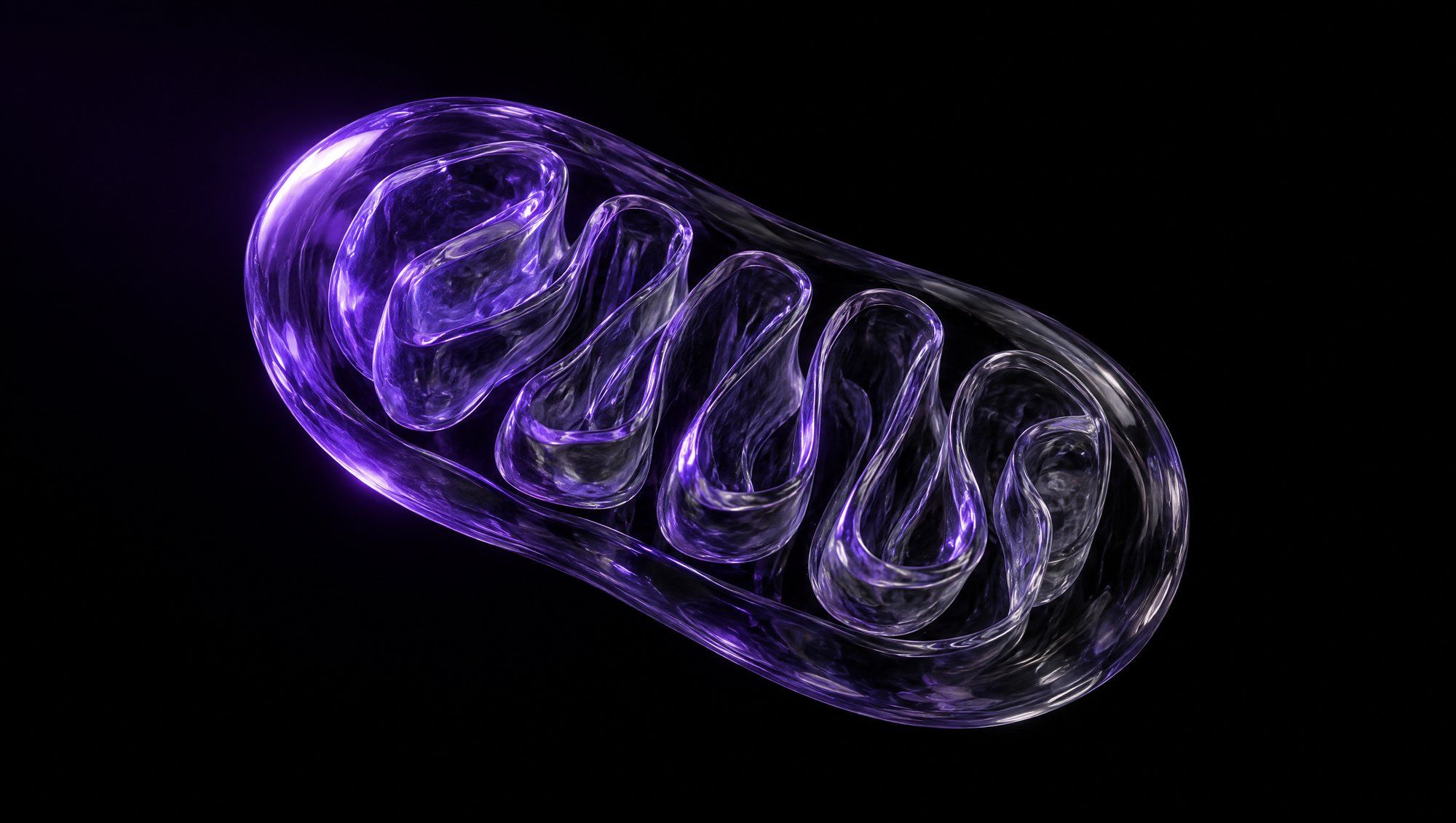
MOTS-c is a small peptide that the mitochondria’s own DNA encodes, which is what makes it unusual. Most peptides and proteins in the body are built from genes in the cell nucleus, but MOTS-c is one of a small family of mitochondrial-derived peptides read from a short open reading frame inside the mitochondrial genome. It was first described in a 2015 paper in Cell Metabolism, which identified it as a 16-amino-acid peptide encoded within the mitochondrial 12S ribosomal RNA gene. The name is a compression of that origin: the mitochondrial open reading frame of the 12S rRNA type-c. Because it is so short and comes from the organelle that runs cellular energy production, MOTS-c is often described as a signal the mitochondria use to talk to the rest of the cell and body about their energy status. That framing is genuinely interesting biology, and it is also the seed of a great deal of marketing that runs far ahead of what has actually been shown in people.
What do people use MOTS-c for, and what are the claimed benefits?
People use MOTS-c for three overlapping goals: more energy and better training, better metabolic health, and healthy aging. Each goal maps to a specific line of research, and each sits at a different evidence level, which is the honest way to read any “MOTS-c benefits” list.
- Metabolic health and insulin sensitivity. The claim traces to the 2015 founding study, where the peptide prevented age-dependent and diet-induced insulin resistance and diet-induced obesity in mice. Evidence level: animal studies; no human treatment data.
- Energy, endurance and training. The claim traces to a 2021 Nature Communications study in which treated mice performed better on the treadmill and exercise raised MOTS-c in human muscle. Evidence level: mouse performance studies plus one human biomarker observation.
- Healthy aging. The claim traces to the same study’s late-life mouse experiments and to a 2023 review noting that the body’s own MOTS-c declines with age. Evidence level: animal studies and human observations; no human longevity trial.
The sections below take each claim in turn, so you can see what was measured, in whom, and how far it is from a human result.
How is MOTS-c thought to work?
MOTS-c is thought to act mainly through AMPK, an ancient cellular fuel gauge that switches on when energy runs low. In the founding 2015 work, the researchers reported that the peptide’s cellular actions inhibit the folate cycle and its tethered de novo purine biosynthesis, leading to AMPK activation. A 2023 review in the Journal of Translational Medicine summarizes the same idea, describing how “MOTS-c mainly acts through the Folate-AICAR-AMPK pathway, thereby influencing energy metabolism…” When AMPK is activated, cells tend to take up more glucose and shift toward burning fuel rather than storing it, which is why MOTS-c is investigated in the context of insulin sensitivity and metabolic flexibility. There is a second proposed mechanism worth understanding, because it is where much of the aging interest comes from: under metabolic stress, MOTS-c does not just act in the cell’s interior. The 2023 review notes that “MOTS-c can be translocated to the nucleus in response to metabolic stress and regulate adaptive nuclear gene expression,” meaning the peptide appears to move into the nucleus and help turn on stress-response genes. Both mechanisms are plausible and supported by laboratory data, but a mechanism is a hypothesis about why something might matter, not proof that dosing it helps a person.
What does the metabolic research on MOTS-c actually show?
The foundational metabolic evidence for MOTS-c comes from mice, and it is genuinely striking within that limit. In the 2015 Cell Metabolism study, the authors reported that MOTS-c treatment in mice prevented age-dependent and high-fat-diet-induced insulin resistance, as well as diet-induced obesity. In other words, animals that would otherwise have become insulin-resistant and fat on a rich diet were partly protected when given the peptide. The study also localized where this happens: the authors wrote that “Its primary target organ appears to be the skeletal muscle,” fitting the AMPK-and-glucose story, since muscle is the body’s largest sink for blood sugar. That is a strong, clean animal result, and it is the reason MOTS-c is discussed alongside metabolic health at all. What the data do not show is any equivalent outcome in humans. There is no published trial in which people were given MOTS-c and then measured for improved insulin sensitivity, body composition, or blood sugar control. Everything in this paragraph describes what happened in mice, which is exactly how the researchers framed it, and it is the single most important distinction to carry into every marketing claim you will encounter.
Why is MOTS-c called an “exercise peptide”?
MOTS-c earned the “exercise peptide” nickname because a single bout of exercise sharply raises the body’s own levels of it. This is one of the few genuinely human findings in the field, and it comes from a 2021 study in Nature Communications. In that work, ten healthy young men exercised on a stationary bicycle, and the researchers measured a roughly 12-fold rise in MOTS-c inside skeletal muscle after exercise, with a smaller increase in the bloodstream that returned toward baseline within about four hours. That is the fact behind the nickname: your body appears to make more MOTS-c precisely when you train. It is crucial to read the direction of that finding correctly. It shows that exercise increases MOTS-c, which is an observation about a biomarker responding to activity. It does not show the reverse, that injecting MOTS-c reproduces the benefits of exercise in a person. The popular “exercise in a vial” pitch quietly flips the arrow on this study, turning “exercise raises MOTS-c” into “MOTS-c substitutes for exercise,” a claim the human data do not support.
What is studied about MOTS-c, aging, and healthspan?
The aging case for MOTS-c rests on mouse healthspan experiments and the observation that the body’s own levels fall over time. The same 2021 Nature Communications study reported that treating mice improved physical performance across the lifespan, in young, middle-aged, and old animals; old mice given MOTS-c ran roughly twice as long and twice as far on a treadmill as untreated controls, and a subset reached the top sprint speed that no untreated old mouse achieved. When the researchers started dosing very late in life, three times a week, they saw improvements in grip strength, stride length, and walking capacity, along with a modest, non-significant trend toward longer median and maximum lifespan of about six to seven percent. On the human side, the 2023 review notes that “MOTS-c is mainly present in skeletal muscle and blood, while its concentration decreases with age,” which is the kind of decline-with-aging pattern that makes a molecule interesting to longevity researchers. All of this is real and worth studying. None of it is a human demonstration that supplementing MOTS-c extends healthspan or lifespan in people, and the lifespan signal in the mouse work was a trend rather than a proven effect even in the animals.
A human genetic clue: the K14Q variant
A naturally occurring variant of MOTS-c called K14Q gives the clearest human clue that the peptide’s biology intersects with metabolism, and it is a genetic finding rather than a treatment result. A 2021 study in the journal Aging examined a naturally occurring variant of the MOTS-c sequence and its relationship to metabolic disease. The authors reported that an East Asian-specific mitochondrial DNA variant, m.1382A>C, changes the fourteenth amino acid of MOTS-c from lysine to glutamine, producing a form called K14Q. Pooling three large cohorts totaling more than 27,000 people, they found that men carrying the variant, but not women, had a higher prevalence of type 2 diabetes, and that the effect concentrated in men who were the least physically active. In laboratory follow-up, the variant peptide behaved differently from the standard one: the researchers wrote that “K14Q MOTS-c has a dramatically diminished action as an insulin sensitizer compared to WT MOTS-c.” This line of evidence is valuable precisely because it is human, and it points in a coherent direction, that MOTS-c biology intersects with metabolism and physical activity. It is still an observational association plus mechanistic bench work, however, not a trial in which anyone was treated with the peptide, so it cannot tell you what dosing MOTS-c would do.
How strong is the human evidence for MOTS-c?
There is no completed human trial testing whether taking MOTS-c improves metabolism, performance, or lifespan in people, and that single sentence should anchor every expectation. What genuinely exists sorts into three buckets. First, cell and biochemical studies establishing the AMPK and nuclear-stress mechanisms. Second, mouse studies showing metabolic protection, better treadmill performance, and a lifespan trend. Third, human observations: that exercise raises endogenous MOTS-c, that circulating levels decline with age, and that a genetic variant of the peptide tracks with type 2 diabetes risk. Notice what is missing from that list: a study in which people were given MOTS-c and measured against a placebo for a health outcome. Even the review literature is candid about how open the field remains. The 2023 review states plainly that “there are still many questions that remain unclear” about MOTS-c. None of this makes the science fringe or fraudulent; the mechanisms are real objects of serious research and the mouse data are strong. But in a market that sells certainty about human anti-aging results, the gap between “protects mice and moves a biomarker in people” and “will help you” is the entire question, and honesty requires stating it rather than blurring it.
MOTS-c evidence at a glance
The table below sorts the MOTS-c research by the type of evidence behind each claim, because the level of evidence, not the boldness of the claim, is what should guide a decision. Read left to right, the pattern is consistent: the mechanistic and animal data are substantial, and the human data are observational rather than interventional.
| Claim you will see marketed | What was actually studied | Evidence level | Source |
|---|---|---|---|
| ”Activates AMPK / metabolic switch” | Folate-cycle inhibition leading to AMPK activation in cells | Cell and biochemical | Lee 2015, Cell Metabolism |
| ”Improves insulin sensitivity” | Prevented diet- and age-related insulin resistance and obesity in mice | Animal (mouse) | Lee 2015, Cell Metabolism |
| ”Exercise in a vial” | A single exercise bout raised the body’s own MOTS-c ~12-fold in muscle in 10 men | Human biomarker observation (not a treatment) | Reynolds 2021, Nature Communications |
| ”Reverses age-related decline” | Improved treadmill performance and grip/stride in mice; lifespan trend only | Animal (mouse) | Reynolds 2021, Nature Communications |
| ”Linked to metabolic health in people” | A genetic variant (K14Q) tracked with type 2 diabetes in >27,000 people, strongest in inactive men | Human genetic association (observational) | Zempo 2021, Aging |
| ”Proven to help humans live longer” | No completed human intervention trial exists | None | , |
MOTS-c results: what was actually measured, in mice and in people
The honest answer to “MOTS-c before and after” is that the measured before-and-after results come from mice, and the only human before-and-after measurement is of the body’s own MOTS-c rising after exercise. In the animal work, the measured changes were concrete: protection from diet-induced obesity and insulin resistance in the 2015 study, and roughly double the treadmill running time and distance in old mice in the 2021 study. In the human part of that 2021 study, the “before and after” was a muscle and blood measurement around a single cycling session, not a course of the peptide.
The closest thing to a human treatment trial involves an analog rather than MOTS-c itself. A 2022 review in the Journal of Clinical Investigation notes that the MOTS-c analog CB4211 has been taken into clinical trials for nonalcoholic steatohepatitis and obesity. The registry entry for that study, a phase 1a/1b trial in healthy volunteers and people with nonalcoholic fatty liver disease, lists 88 participants and a primary completion date in April 2021, and shows no posted results. So the before-and-after stories circulating online are personal reports, not trial outcomes, and they cannot tell you how much of a change came from the peptide rather than training, diet or expectation.
What are the side effects of MOTS-c?
There is no published human safety profile for MOTS-c, because no completed trial of the peptide itself has reported results, and that gap is the main thing to know about its side effects. The 2023 review in the Journal of Translational Medicine is candid that “there are still many questions that remain unclear” about the peptide, and the one registered human study of a MOTS-c-based drug, the CB4211 trial above, has no results posted. That means nobody can give you a reliable figure for how common any side effect is, what happens with long-term use, or how it interacts with other drugs. Our MOTS-c side effects guide lays out the full human safety record, including what the CB4211 analog trial reported.
Two general points still apply. Product quality matters: the FDA notes that even licensed compounded drugs are not reviewed by the agency for safety, effectiveness, or quality before they are marketed, and that too much active ingredient or a contaminant can cause serious harm. And because MOTS-c is studied for its effects on glucose handling, people on glucose-lowering medicines have a specific reason to talk to a clinician first. The groups with the most reason for caution are those nobody has studied: anyone pregnant or breastfeeding, anyone with diabetes or on glucose-lowering drugs, and anyone with a history of cancer.
How do people stack MOTS-c?
In community discussion MOTS-c is rarely taken alone. The most common pairing is with SS-31, another mitochondria-targeted peptide, and broader routines add NAD+ precursors, GHK-Cu or GLP-1 drugs, often timed around fasting and training. None of these combinations has been tested together in a trial, so any stack is an N=1 experiment. For the NAD+ side of that comparison, including what the human NAD+ trials did and did not show, see NAD+ vs peptides for longevity; for the drug most often weighed against peptides for aging, see rapamycin vs peptides for longevity.
What does MOTS-c cost?
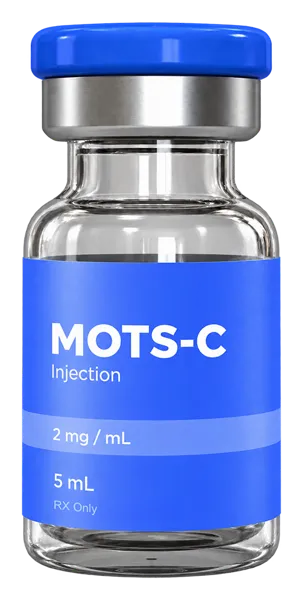
MOTS-c is one of the pricier peptides in the longevity category. On the storefront linked in this page’s “Where it’s sold” card, the list price captured on October 12, 2026 was $619 a month on a one-month plan or $565 a month on a three-month plan, for a 2 mg/mL, 5 mL injectable vial. Prices change, so treat that as a dated snapshot, and weigh it against the evidence level above: at those prices a year of use costs several thousand dollars for a compound whose benefits have been measured in mice.
What is the community saying about MOTS-c?
The longevity community talks about MOTS-c mainly as a mitochondrial and energy peptide, and the conversation mixes enthusiasm with open skepticism. Our MOTS-c community tracker, drawn from 19 public posts on X collected in July 2026, found three recurring threads:
- Mitochondria and energy. Many posts frame MOTS-c as a tool for cellular energy and mitochondrial function, and several users say they feel more energetic or younger while using it. These are personal characterizations, not measured outcomes.
- The SS-31 pairing. Users debate whether to run MOTS-c and SS-31 together or one after the other. Some say they ran SS-31 first and added MOTS-c later with no adverse reaction; there is no consensus.
- Hype fatigue. Some commenters group MOTS-c with trend-driven compounds people adopt without much thought, and one user said he was prepared to dismiss it before revisiting his verdict after a month of daily use.
Read against the research above, these reports echo the themes of the mouse data (energy, metabolism, performance) but cannot confirm them, because self-reports cannot separate the peptide from training, diet, sleep and expectation.
Status: Not FDA-approved; sold by some telehealth providers as a compounded prescription. An FDA advisory committee reportedly voted in July 2026 to recommend allowing pharmacies to compound it; nothing has changed yet. (How peptide status works)
How this page is sourced
Every factual claim on this page traces to a primary study or a government document rather than a testimonial, because in this category the honest proof is citations and dated facts, not before-and-after stories. The metabolic and structural findings come from the 2015 Cell Metabolism study that first described MOTS-c; the exercise, performance, and healthspan findings come from the 2021 Nature Communications study, whose human data are an exercise-biomarker measurement in ten men rather than a treatment trial; the mechanism summary and the age-related decline come from a 2023 review in the Journal of Translational Medicine; and the human genetic association comes from a 2021 study in Aging. The analog trial details come from the 2022 Journal of Clinical Investigation review and the ClinicalTrials.gov registry entry, and the community summary comes from our own dated collection of public posts. This piece is drafted with AI assistance and fact-checked against its cited primary sources. Our longevity peptides overview sets MOTS-c alongside the other compounds in this space.
The honest next step if metabolic health is your goal
If your real goal is better metabolic health, the most useful next step is a conversation about that goal with a licensed provider, because MOTS-c has no completed human trials and nobody can yet tell you what it will do for you. A provider can look at where you actually are, including your labs, your body composition, your sleep, and your training, and recommend an evidence-based plan that fits, which may look very different from what a forum suggested. Some of the best-supported metabolic levers are unglamorous, from resistance training and protein intake to sleep and, where clinically appropriate, approved medications. GLP-1 medicines are the clearest metabolic example, though the low-dose “microdosing for longevity” use popular online runs well ahead of its evidence, as we cover in GLP-1 microdosing for longevity; for the approved use, our sister publication covers how branded, physician-managed GLP-1 care actually works. What no honest source should imply is that MOTS-c has already shown, in people, the benefits it shows in mice. To make the first conversation easier, we distilled the questions from this guide into a free, one-page checklist you can bring to any provider.
Educational information only, not medical advice. Every evidence statement on this page is sourced to the primary documents linked above. Updated October 12, 2026.
Sources (7)
Advertising disclosure: links marked "Paid link" go to Bodybuilding Peptides (trybbpeptides.com), an affiliate destination, and Healthspan Signal may earn a commission if you buy there. Our coverage is independent of that relationship, and nothing on this page is medical or legal advice.
 See it at Bodybuilding Peptides